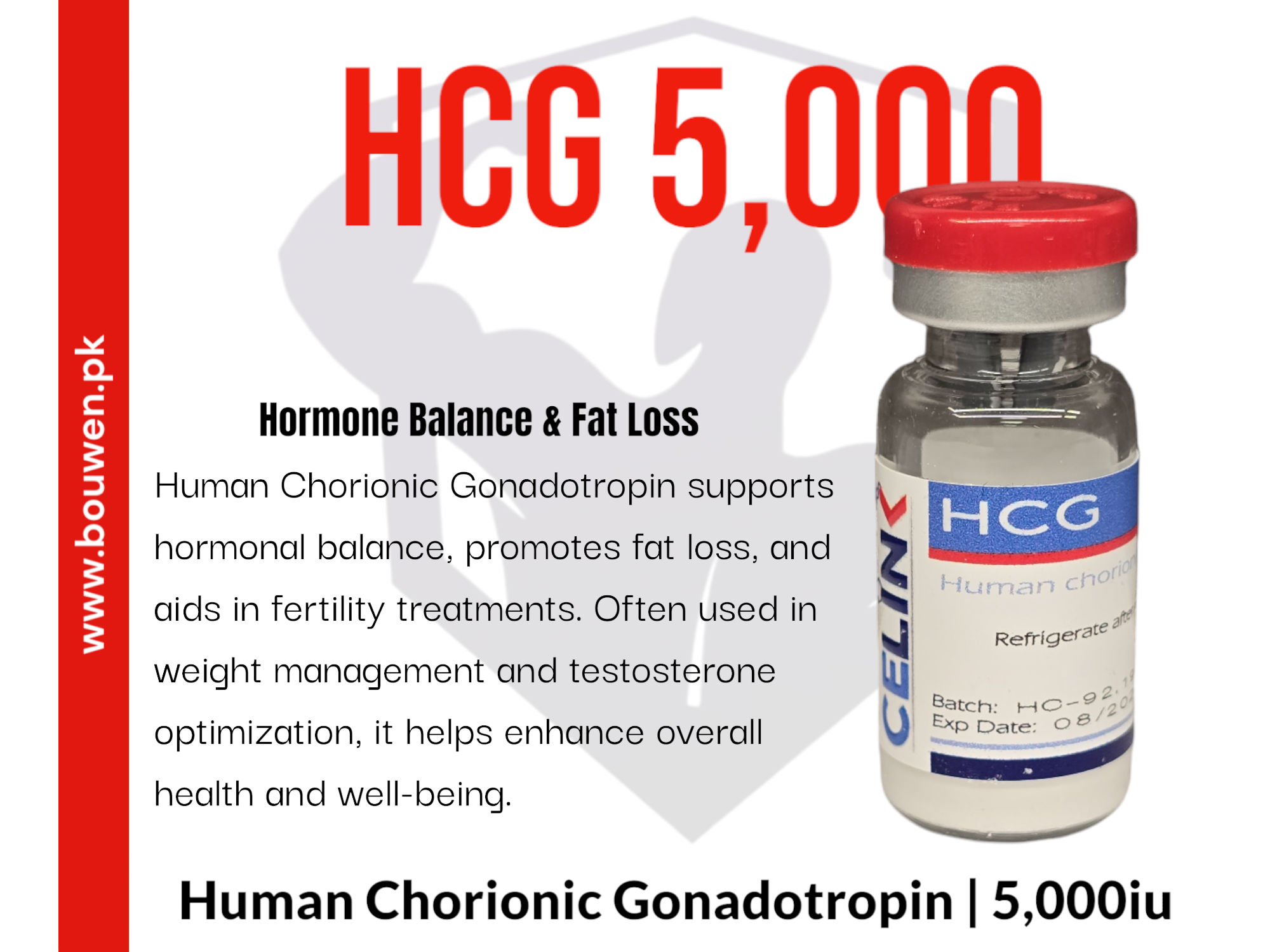
Human Gonadotropin (HCG)
HCG is a versatile hormone used for weight loss in the HCG diet and for hormone regulation during and after anabolic steroid cycles. In the HCG diet, it helps mobilize stored fat for energy, supporting fat loss while preserving muscle mass. For steroid users, HCG mimics Luteinizing Hormone (LH) to maintain testosterone production, prevent testicular atrophy, and aid in post-cycle recovery.
Dosage:
- Weight Loss: 125-200 IU daily alongside a calorie-restricted diet.
- On-Cycle: 250-500 IU twice weekly.
- PCT: 1,000-2,500 IU every other day for 10-20 days.
Description
HCG (Human Chorionic Gonadotropin) — Injectable Gonadotropic Hormone
5,000 IU • 7,000 IU • 10,000 IU
HCG (Human Chorionic Gonadotropin) is a naturally occurring peptide hormone that mimics the
biological activity of Luteinizing Hormone (LH). In clinical and research settings, HCG is widely
used to stimulate endogenous testosterone production, maintain testicular function,
and support fertility-related pathways.
Unlike exogenous testosterone, HCG works by signaling the testes directly, preserving intratesticular
testosterone and spermatogenesis.
✅ Product Overview
| Compound | Human Chorionic Gonadotropin (HCG) |
| Hormone Class | Gonadotropin (LH analog) |
| Available Strengths | 5,000 IU • 7,000 IU • 10,000 IU (total per vial) |
| Primary Research Focus | Testosterone support, fertility signaling, testicular maintenance, endocrine recovery |
| Typical Routes Studied | Subcutaneous (SC) or Intramuscular (IM) |
🧠 Mechanism of Action — How HCG Works
0
- LH receptor activation: HCG binds to LH receptors on Leydig cells in the testes,
stimulating endogenous testosterone synthesis. - Maintenance of intratesticular testosterone: Critical for preserving sperm production
and testicular volume. - Bypasses hypothalamic suppression: Continues testicular signaling even when the HPTA
is suppressed by exogenous androgens. - Fertility signaling: Commonly used in protocols aimed at supporting spermatogenesis
and reproductive hormone balance.
📅 Dosing & Use Context (Educational Reference)
HCG dosing varies widely depending on research objective (TRT support, fertility signaling,
or post-suppression recovery). The following represents commonly referenced educational ranges.
- Low-dose signaling support: Small, frequent doses to mimic physiologic LH
- Maintenance protocols: Used alongside testosterone to preserve testicular function
- Recovery-focused protocols: Higher short-term dosing under supervision
Key principle: More is not always better. Excessive HCG exposure can
increase estrogen conversion and desensitize LH receptors.
🥗 Supportive Nutrition & Stack Considerations
- Zinc & selenium: Support steroidogenesis
- Vitamin D: Correlated with healthy testosterone signaling
- Cholesterol adequacy: Essential substrate for hormone production
- Common research pairings: Testosterone, SERMs, aromatase management strategies
⚠️ Contraindications & Cautions
- Hormone-sensitive cancers (e.g., prostate, breast)
- Primary testicular failure (non-responsive testes)
- Uncontrolled estrogen-related conditions
- History of gynecomastia without estrogen management
- Pregnancy (male-use context)
😵 Commonly Reported Effects
- Injection-site irritation
- Water retention
- Increased estrogen-related effects (dose dependent)
- Testicular fullness or sensitivity
- Mood or libido changes during adjustment
🧾 Important Notice
This product is provided for research and educational purposes only.
HCG is a prescription hormone in many jurisdictions. Information provided here is not medical advice
and is not intended to diagnose, treat, cure, or prevent any disease.
Hormonal compounds should be used only with appropriate knowledge, monitoring, and professional oversight.